ServicesCommercial Roofing
Commercial Roofing in Balch Springs
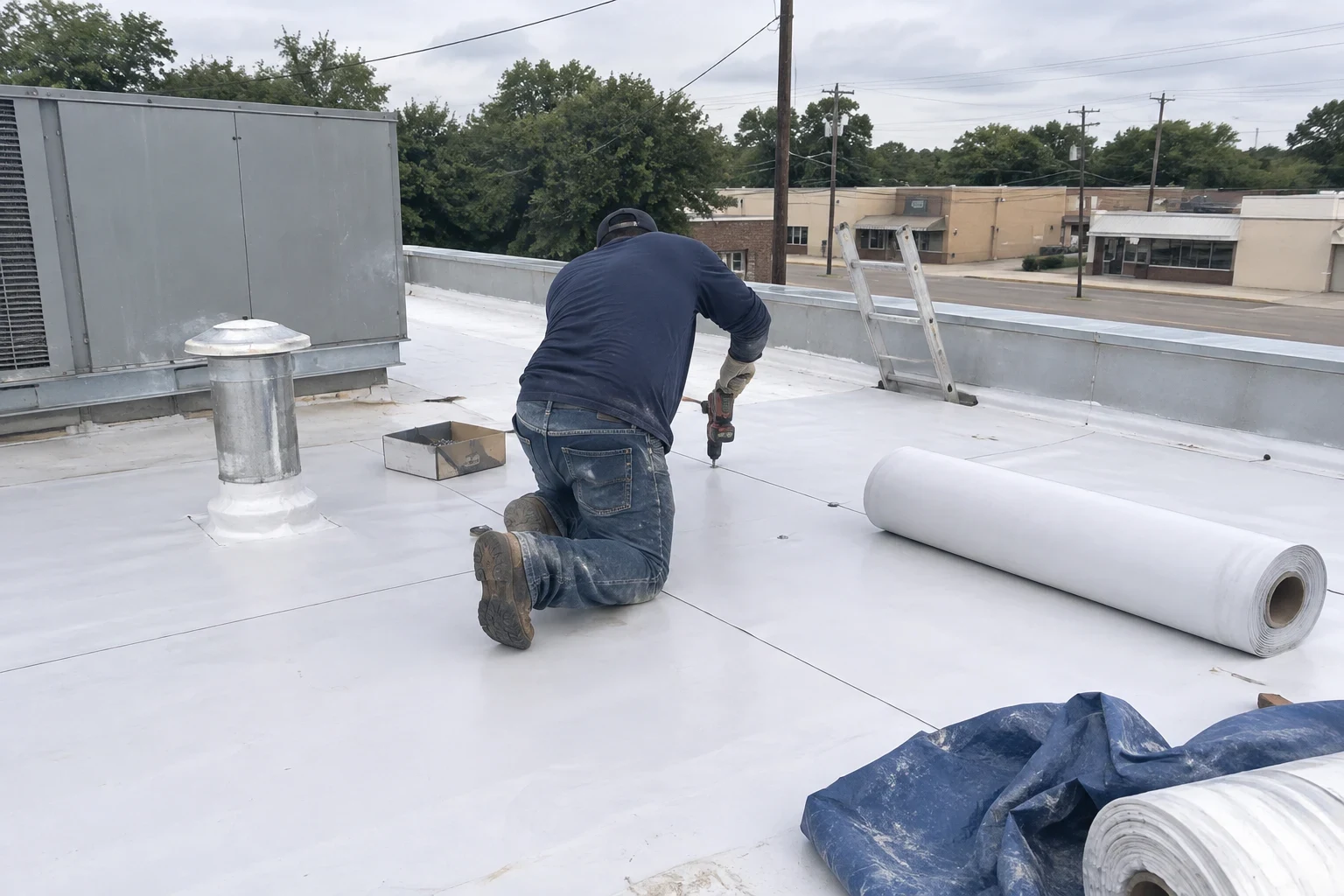
We install single-ply, modified bitumen and metal roof systems on offices, retail spaces and warehouses. One person walks your roof, writes the estimate, schedules the crew around your business hours and stays your contact until the site is clean.
Roof systems built for flat and low-slope buildings
A commercial roof is a layered system, not a single surface. Metal or wood deck, insulation board, often a cover board, then the membrane, plus the flashing at every wall, curb and drain. Most leaks on low-slope roofs start at those transitions, so that is where we spend our time on the estimate and on install day.
Commercial work brings more parties than a house does: owners, tenants, property managers, sometimes a landlord's insurer. We put one person in charge of your project. That person answers your questions, coordinates material delivery and crew timing, and is the name you call when a tenant asks what is happening on the roof.
Our company is licensed and insured, and that coverage applies to the crews on your building.
What our commercial roofing work covers
TPO single-ply membrane
White TPO reflects much of the summer sun, which helps keep the space below cooler. Seams are heat-welded with a hot-air welder, then probed so a cold weld does not slip through.
Modified bitumen
Multi-ply asphalt systems with a granulated cap sheet hold up well to foot traffic around rooftop equipment. We use them where service techs walk the roof often.
Metal panel roofs
For low-pitch metal, we address fastener back-out, failed sealant at panel laps and rust at end laps. Fasteners with new neoprene washers keep water from following the screw shank.
Insulation and cover board
Polyiso board sets the R-value, and a cover board protects it from hail and boot traffic. Tapered insulation can be added to move water toward drains instead of letting it pond.
Flashing, curbs and drainage
We flash HVAC curbs, pipe penetrations, parapet walls and metal coping, and we set drains and scuppers so water leaves the roof. Termination bars and counterflashing finish the edges.
When a flat or low-slope roof is due for a closer look
- Puddles that outlast the storm
- If water is still sitting on the membrane 48 hours after the rain stops, its weight is loading the deck and the sun is aging the membrane faster around the edges of each puddle. A sagging deck, crushed insulation or a drain set higher than the surrounding surface is usually behind it.
- Rings on drop-ceiling tiles
- Brown stains on ceiling tiles tell you water has already gotten through the membrane and the insulation above it. Once polyiso board soaks up water it stops insulating well and can hold that moisture for months.
- Bubbles or lifting seams
- Blisters in modified bitumen form when moisture trapped between plies expands in summer heat. A TPO seam that peels up usually points to a weld that never fully fused or to movement where the roof meets a wall.
- Cracks around HVAC curbs
- Rooftop units shake while they run and get walked around during service calls. The sealant and flashing at their curbs tend to split first, often after a hot summer gives way to a hard freeze.
- Backed-out screws and rusty laps
- On a metal roof, fasteners standing proud of the panel and orange streaks at the overlaps mean the washers and lap sealant have failed. Water follows the screw shank or wicks along the lap into the building.
How a commercial roofing project runs
- 1
Your call and the roof walk
You call and tell us about the building. The person who takes your call walks the roof, checks drains, flashing and seams, and photographs what is found so you see the same conditions we do.
- 2
A written, line-item estimate
The estimate lists the membrane, insulation, flashing details and any deck work separately. If a smaller scope makes more sense than a full new system, we say so.
- 3
Scheduling around your operation
We plan noisy work, crane lifts and material staging around your hours and your tenants. Permits are pulled before the crew arrives.
- 4
Install and daily dry-in
Each section that is opened gets closed and watertight before the crew leaves for the day. Your contact checks in with you as sections are finished.
- 5
Cleanup and final walk
We clear debris, magnet-sweep the parking area for fasteners and walk the finished roof with you, pointing out drains and flashing details.
What sets the price of a commercial roof
Every building gets its own number after we have walked the roof. The membrane is only part of it. What sits under the surface and how the crew gets materials up there move the total just as much.
- Roof size and shape
- Square footage drives material, but parapets, roof levels and odd angles add flashing and labor.
- Membrane and insulation choice
- TPO thickness, modified bitumen plies and the insulation R-value you want each change the material cost.
- Condition under the membrane
- Wet insulation or a rusted metal deck has to come out before anything new goes down. We document it with photos so the line item makes sense.
- Penetrations and rooftop equipment
- Each HVAC curb, vent and pipe needs its own flashing. A roof crowded with units takes more detail work.
- Access, hours and permits
- Crane time, after-hours work for occupied buildings and the permit itself all appear on the estimate.
Questions about commercial roofs
- Do we need to shut down during the roof work?
- In most cases, no. We schedule tear-off, crane lifts and other noisy work around your business hours and keep entrances open for staff and customers. Your contact lets you know in advance which days will be loudest so tenants can be warned.
- What flat-roof membrane stands up best to long, hot summers?
- White TPO bounces back a large share of the sun's heat, which makes it a good fit when cooling bills matter. Modified bitumen holds up better where techs walk a lot around rooftop equipment. At the estimate we go over the pros and cons for your building.
- Is the work covered once the crew is gone?
- A workmanship warranty comes with eligible projects, and its coverage depends on the service. Before you sign, your contact reviews the terms that apply to your roof.
- How many days does a commercial roof take?
- It depends on the size of the roof, how much wet insulation or damaged deck shows up when the old layers are removed, and the weather. Any section we open is dried in before the crew leaves for the day, so rain may delay the schedule but won't leave the building open. Your estimate shows the planned order of work so you can plan around it.
- Who is my contact after work begins?
- The person who walked your roof and wrote the estimate. Owners, property managers and tenants all bring their questions to that one contact, so everyone gets the same answer.
- Do you roof homes too?
- Yes. Our Residential Roofing page explains the shingle and home roof systems we install for homeowners in Balch Springs and nearby towns such as Mesquite and Seagoville.
Talk with the person who will run your roof project
Share a few details about the building and the roof, and we will book a time to walk it. A written estimate follows, and the same person stays with your project through the final cleanup.