ServicesRoof Inspections
Roof Inspections in Balch Springs
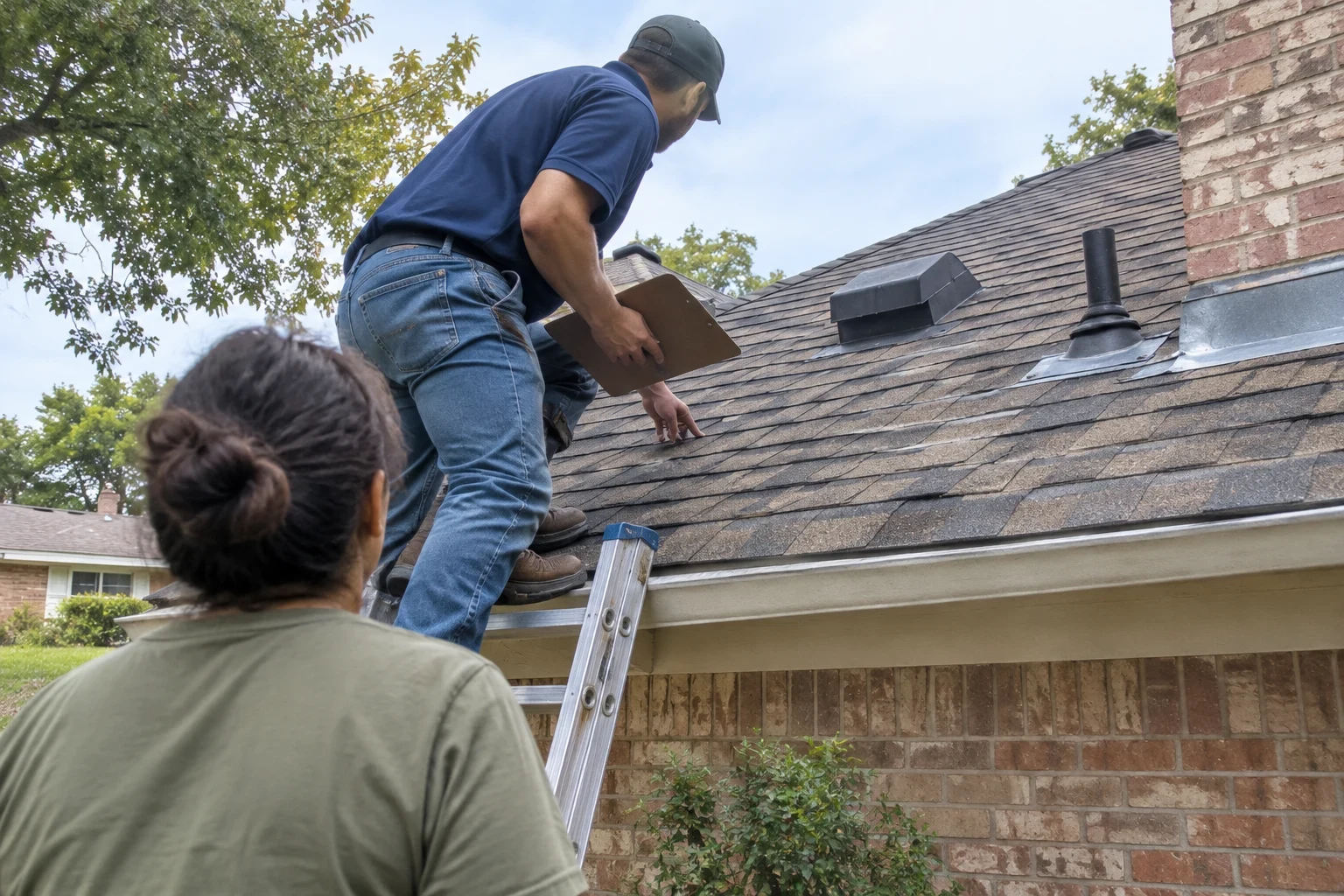
We check the shingles, flashing, pipe boots and attic decking on your home, photograph what we find, and explain the cause behind each problem. One person schedules the visit, does the walkthrough with you and answers your follow-up questions.
What a Roof Inspection Tells You
Most roof problems start small and out of sight. A cracked rubber pipe boot, a lifted shingle tab or a gap in step flashing lets water reach the decking long before a stain shows on your ceiling. An inspection finds those points while they are still small, and tells you why they failed so you know whether the cause is age, installation, wind or hail.
We look at the roof from three angles: the surface, the transitions where water changes direction, and the attic underneath. The attic matters because it shows what the shingles hide, like damp or darkened decking, rusted nail tips and blocked soffit vents that cook shingles from below in a North Texas summer.
You deal with one contact the whole way. The same person who sets the appointment explains the findings and stays reachable afterward, so you never repeat your roof's story to someone new.
What We Check on Your Roof
Shingle surface and fasteners
We look for granule loss, cracked or creased tabs, nail pops and shingles that have lost their seal strip bond. Creases near the top of a tab usually mean wind lifted it, which weakens the shingle even if it lies flat again.
Flashing and valleys
Step flashing at sidewalls, counterflashing at chimneys and the metal or woven shingles in valleys carry the most water. We check for gaps, loose sealant and rust, since these transitions are where most leaks begin.
Penetrations and pipe boots
Rubber pipe boots dry out and split under constant UV exposure. We also check vent caps, exhaust hoods and skylight curbs for lifted edges and failed seals.
Attic and decking
From inside the attic we look for water trails, soft or stained decking, daylight at nail holes and insulation pulled away from the eaves. These signs confirm or rule out what we saw on top.
Ventilation balance
Too little intake at the soffits or too little exhaust at the ridge traps heat and moisture. That shortens shingle life and can affect manufacturer coverage, so we note what the attic airflow looks like.
Photo report and walkthrough
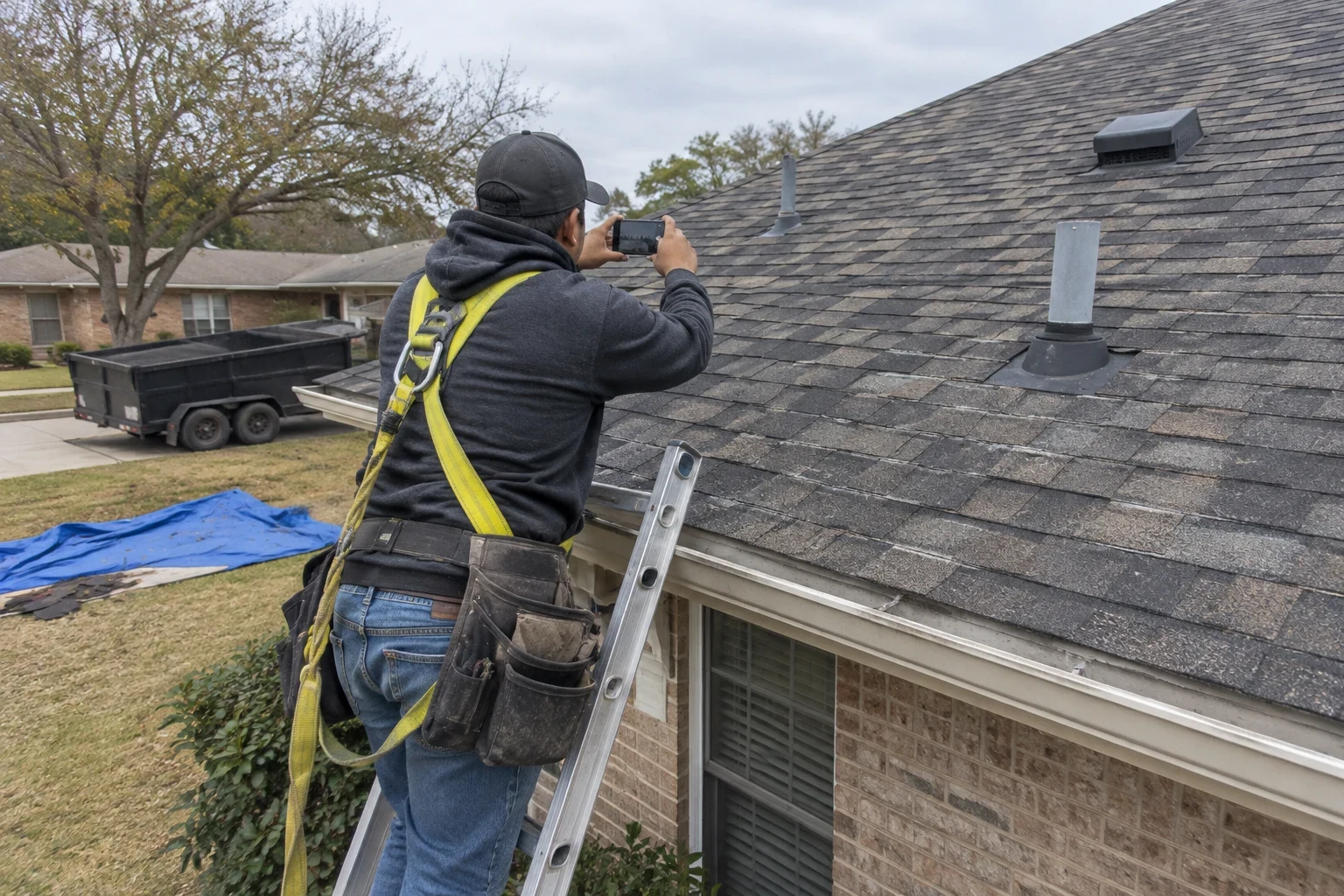
Every finding gets a photo and a short note on its cause. We go through them with you in plain terms and point out which items are urgent and which can wait.
Signs Your Roof Is Due for an Inspection
- A hailstorm passed through
- Hail can bruise shingles and knock off granules without leaving obvious holes. Spring storms in this part of Texas make a check after any hail event a sensible step.
- Granules collecting at downspout outlets
- A buildup of gritty, sand-like granules means the asphalt layer is losing its protective coating and aging faster.
- Stains on ceilings or attic decking
- Brown rings or dark spots on the decking point to water getting past the shingles. The leak source is often several feet uphill from the stain.
- Lifted or missing shingles after wind
- Even one missing tab exposes the underlayment to sun and rain.
- Buying or selling a home
- A focused roof inspection gives you a clear picture of condition and remaining life before you sign anything.
How the Inspection Day Runs
- 1
Your phone call
You tell us what prompted the call, whether a stain, a storm or a home sale. Your contact sets a time and asks about attic access so we arrive prepared.
- 2
On the roof
We walk the roof where the pitch allows safely and inspect steeper sections from ladders and the edges. We photograph each slope, every penetration and all flashing transitions.
- 3
In the attic
We check the underside of the decking, the framing and the ventilation path. This step often confirms whether a surface issue is actually letting water in.
- 4
Findings, explained
We sit down with you, go through the photos and explain the cause of each item. If residential roofing work makes sense, the same contact walks you through the estimate and what it covers.
What Affects the Inspection Estimate
The estimate itself is free, and we explain the scope before any work is scheduled. What changes the effort is mostly how much roof there is and how hard it is to reach. We tell you up front what the inspection covers so nothing on the bill surprises you.
- Roof size and pitch
- A larger roof or a steep pitch takes more time and more safety setup, especially above 8/12 where walking is not safe.
- Stories and access
- Two-story homes, tight side yards and landscaping near the eaves affect ladder placement and time on site.
- Attic access
- A pull-down ladder is quick. A small hatch in a closet or a low-clearance attic takes longer to inspect properly.
- Purpose of the report
- A home sale or an insurance claim usually needs more detailed photo documentation than a routine check.
Roof Inspection Questions
- How long does a roof inspection take?
- Most take one to two hours on site, including the attic. Steep or large roofs take longer. We go through the findings with you before we leave.
- Do I need to be home?
- We need attic access, so someone should be home to let us in. Being there also lets you see the photos and ask questions while we are on site.
- Can you help with an insurance claim after hail?
- We document hail and wind damage with dated photos and notes on each slope, which you can share with your insurer. We explain how the claim process usually works, but the adjuster makes the coverage decision, not us.
- What credentials do you carry for work on my roof?
- We are licensed and insured. That coverage applies to the time our crew spends on your property, including climbing and walking your roof during the inspection.
- Is there a warranty if the inspection leads to roofing work?
- We offer a workmanship warranty on eligible projects, and coverage varies by service. Your contact will tell you exactly what applies to the work in your estimate.
- How often should a roof be inspected?
- Once a year is a good habit for an asphalt shingle roof, plus after any hail or strong wind. Roofs past about 15 years benefit most, since seals and pipe boots fail more often with age.
Know What Is Happening Up There
One phone call sets up the visit, and the same person explains every photo afterward. We serve Balch Springs and nearby towns including Mesquite, Seagoville and Forney.