ServicesGutters
Gutter Installation in Balch Springs
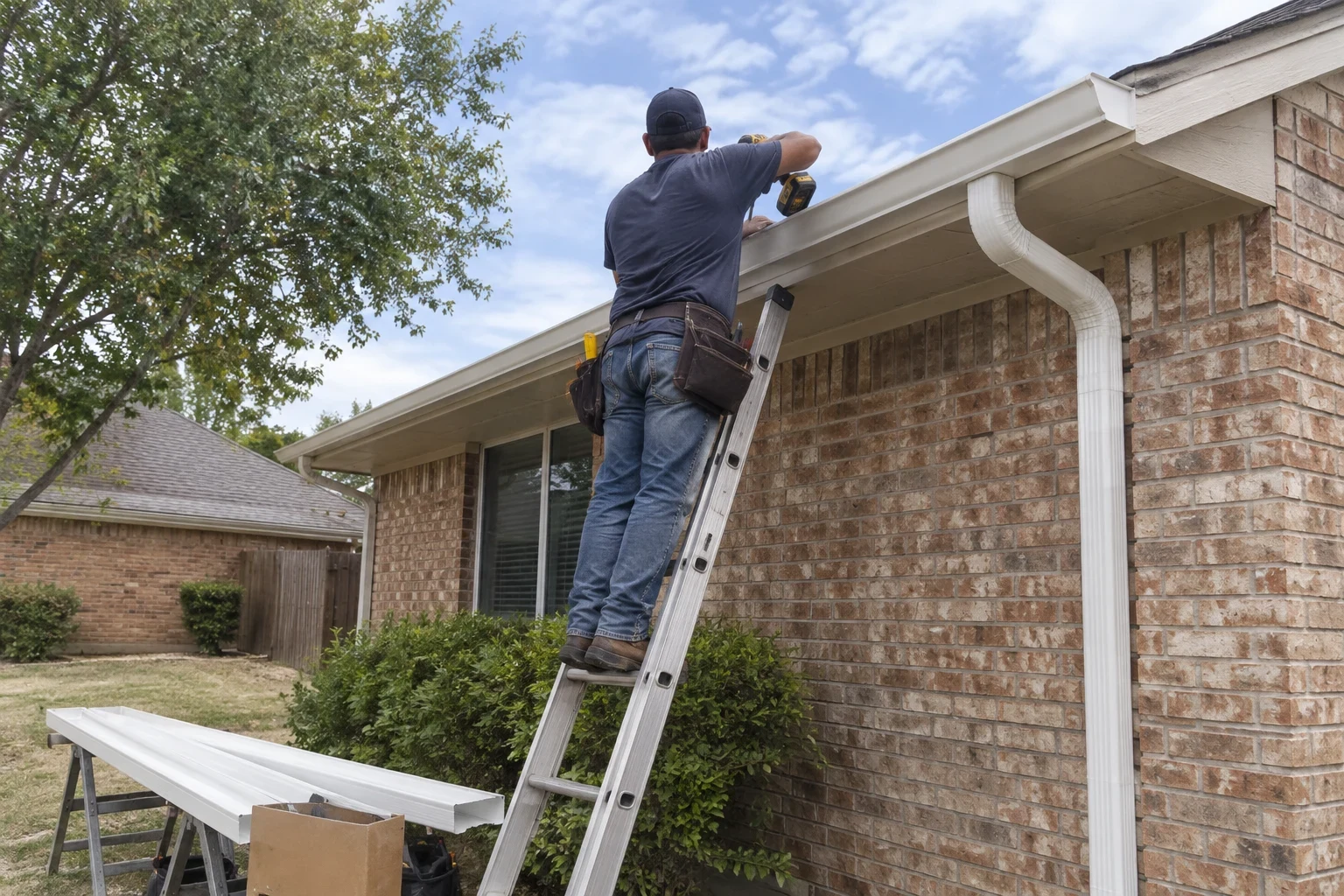
We measure your roof, size the gutters and downspouts to the water it actually sheds, and form one-piece aluminum runs on site. One person handles your questions and schedules the crew, so you know who to ask from the first visit to the final water test.
What a Gutter System Is Supposed to Do
A gutter collects the water running off your roof's eaves and moves it to a few chosen points, away from the walls and foundation. When it works, you barely notice it. When it is undersized, sagging, or pitched the wrong way, water spills over the front edge and lands right where your home is most vulnerable.
That matters here more than people expect. The expansive clay soil common around Balch Springs swells when it gets soaked and shrinks when it dries, and a gutter dumping water at one corner of the slab can feed that cycle. A properly sized system with downspouts placed for your lot keeps that water spread out and moved away.
New gutters are the right call when the old ones leak at the seams, pull loose from the fascia, or simply overflow in a hard rain. Our company is licensed and insured for this work, and one contact coordinates your job from the estimate through cleanup, so you are not repeating yourself to a new person at each step.
What Your Gutter Installation Includes
Continuous runs formed on site
We roll-form K-style aluminum gutter from a coil at your home, cut to the exact length of each eave. The only joints are at corners and end caps, which are the spots we seal. Fewer joints means fewer places for a slow drip to start.
Sizing based on roof area
We measure the square footage and pitch draining to each run. Many homes do fine with 5-inch gutters, but long or steep roof planes often need 6-inch gutters and larger 3x4 downspouts to keep up in a heavy storm.
Hidden hangers and correct pitch
Gutters are hung on screw-in hidden hangers spaced closely along the run, which resist sagging far better than old spike-and-ferrule fasteners. Each run is set with a slight, steady fall toward its downspout so water does not sit and pond.
Downspout placement and extensions
We place downspouts where the water can leave the house, then add extensions or splash blocks so the discharge lands away from the foundation, walkways, and flower beds.
Removal and haul-off
If you have existing gutters, we take them down, pull the old fasteners, and haul the material away. You are not left with a pile of bent aluminum by the driveway.
Gutter guards, if they make sense
Guards help under trees that drop leaves, needles, or seed pods. If your home has little overhead canopy, we will tell you they are probably not worth the cost.
Signs Your Gutters Need Attention
- Water sheeting over the front edge
- If water spills over the lip during a steady rain, the gutter is either clogged, too small for the roof area, or pitched backward. Each cause has a different fix, and we check which one it is.
- Drips and rust lines at the joints
- Sectional gutters rely on sealant at every joint, and that sealant dries out and cracks in the summer heat. Streaks or stains below a joint usually mean it has been leaking for a while.
- Runs pulling away or sagging
- A gutter that bows between fasteners or leans out from the house has lost its grip. Sagging sections hold standing water, which adds weight and makes the problem worse.
- Washed-out soil near the foundation
- Trenches in the mulch, exposed roots, or a gap opening between the soil and the slab often trace back to a downspout that ends too close to the house or is missing altogether.
- Peeling paint or dark stains on the trim
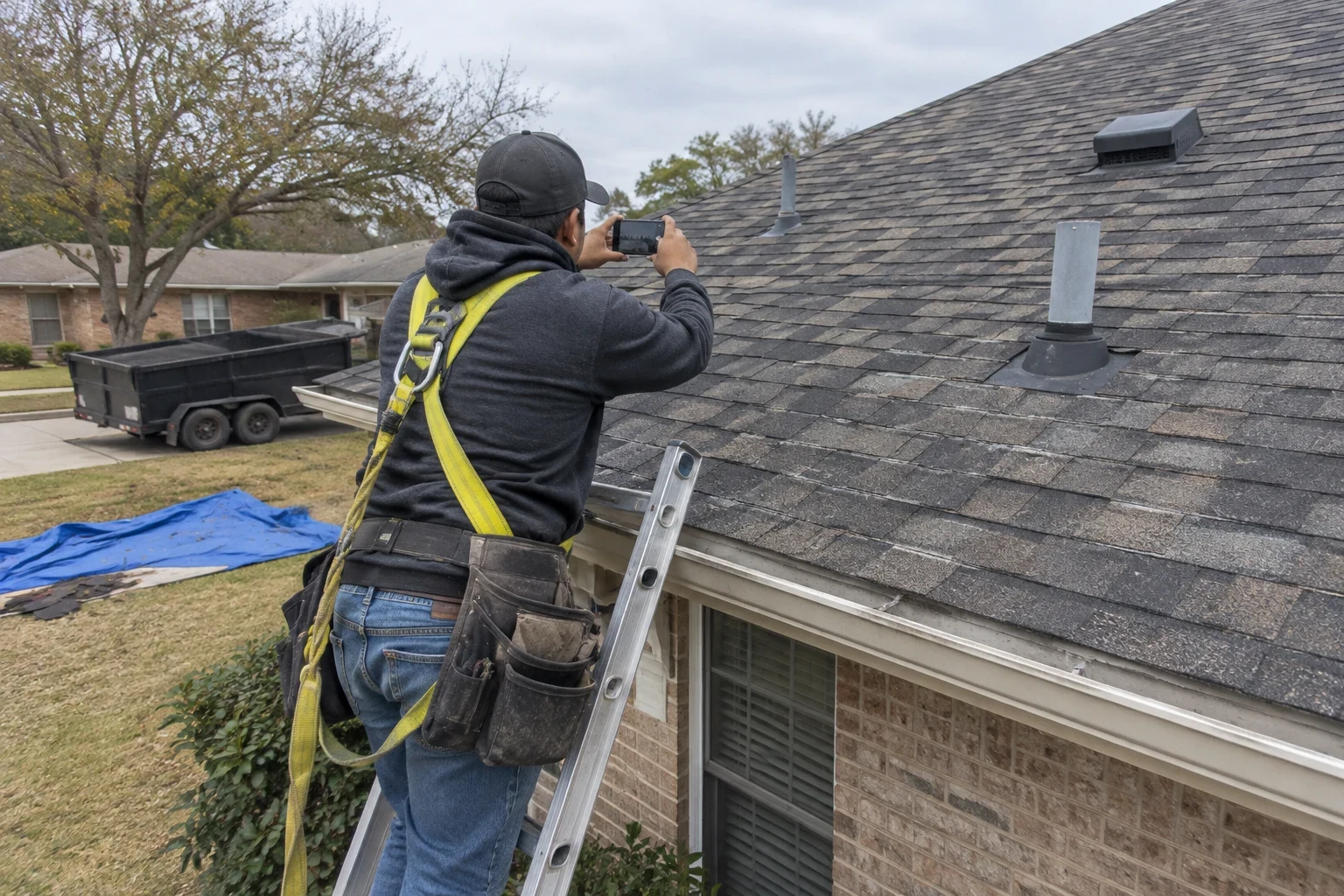
- Water that gets behind a gutter soaks the wood it is attached to. We point this out and photograph it, because a gutter needs solid backing to hold its hangers.
How a Gutter Job Runs
- 1
The phone call and site visit
You call, describe what you are seeing, and we set a time to come measure. Your contact walks the perimeter with you, notes each run and downspout location, and looks at the trim the gutters will attach to.
- 2
A written estimate you can read
You get a line-item estimate showing linear feet, gutter size, downspout count, guards if requested, and removal of the old system. If we found soft wood or another concern, it is listed with photos so you can decide before anything is ordered.
- 3
Install day
The crew removes the old gutters, forms the new runs on site, sets hangers, seals corners and end caps, and attaches downspouts and extensions. Most single-story homes are finished in a day.
- 4
Water test and cleanup
We run water through each section to confirm it drains to its downspout without ponding. Then we pick up cut-offs, screws, and old sealant, and your contact checks in with you before the crew leaves.
What Moves the Price of Gutters
Gutter pricing comes down to how much material goes on your home and how hard it is to reach. We quote it as a written line-item estimate, so you can see what each part of the job costs. Nothing gets added on install day without talking to you first.
- Linear footage and number of stories
- Total eave length sets the material count. A two-story home needs taller ladders, more setup time, and more care around landscaping.
- Gutter size and downspouts
- Moving from 5-inch to 6-inch gutters, or from 2x3 to 3x4 downspouts, adds material. More downspouts or long extensions also add to the total.
- Corners and roofline shape
- Every inside or outside corner is a mitered, sealed joint. A simple rectangular ranch costs less per foot than a home with many hips, valleys, and short runs.
- Removal and what is behind the old gutters
- Taking down an existing system adds labor. If the trim it was attached to is damaged, we show you before we hang new gutters on it.
- Guards and options
- Gutter guards are priced separately, so you can see whether they are worth it for the trees around your home.
Gutter Questions We Hear Most
- Do I need 5-inch or 6-inch gutters?
- It depends on the roof area and pitch draining into each run, not the size of the house overall. Long, steep roof planes concentrate a lot of water at one eave, and a 5-inch gutter can overflow there in a heavy storm. We measure each section and recommend the size on the estimate, with the reason written next to it.
- Why continuous gutters instead of sectional ones?
- Sectional gutters come in short lengths joined with sealant every several feet, and each joint is a future leak. Continuous gutters are formed to the full length of the eave, so the only joints are at corners and ends. That cuts down on maintenance and stops most of the drips that stain trim and siding.
- Will installing gutters damage my roof?
- No. The gutters attach to the trim board along the eave, and hidden hangers fasten into that board, not through your shingles. The back edge of the gutter sits beneath the drip edge so water rolling off the roof falls into it.
- Are gutter guards worth it?
- Under oaks, pecans, or pines, guards save a lot of ladder time and keep downspouts from clogging. On a home with little tree cover, a cleaning once or twice a year may be cheaper. We give you an honest answer for your lot rather than adding them by default.
- Is the work covered by a warranty?
- We offer a workmanship warranty on eligible projects, and coverage varies by service. Your contact will explain what applies to your gutter job when you go over the estimate together.
- How long does installation take?
- Most single-story homes take one day, including removal of the old gutters and cleanup. Two-story homes or rooflines with many corners can run longer, and we tell you that when we schedule.
Get Water Moving Away From Your Home
Tell us what you are seeing during a rain, and we will set up a visit to measure. You will have one contact for the estimate, the install, and the final walk-around.